
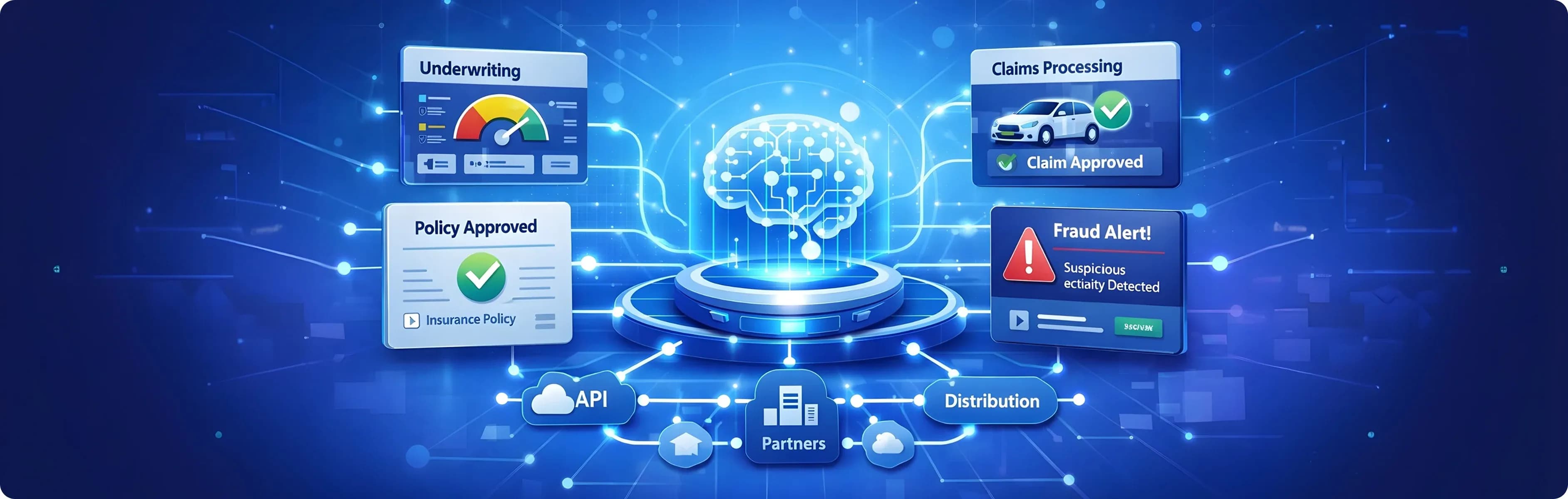
Automation has become one of the defining forces behind the rise of insurtech. As insurers face mounting pressure to reduce costs, improve turnaround times, and deliver seamless digital experiences, automation is no longer optional; it is foundational. Traditional insurance models relied heavily on manual underwriting reviews, paper-based documentation, email-driven communication, and siloed back-office processing. These workflows were time-consuming, error-prone, and difficult to scale. Insurtech players disrupted this model by embedding automation directly into core processes, enabling faster decision-making and operational consistency. Today, automation in insurtech spans the entire insurance value chain from lead capture and policy issuance to claims settlement and compliance reporting. By leveraging rule engines, robotic process automation (RPA), AI-powered document recognition, and API-driven integrations, insurtech platforms eliminate repetitive tasks and reduce human dependency in high-volume operations. This shift not only lowers operational expenses but also improves customer satisfaction by accelerating service delivery. For insurers and distributors navigating competitive distribution landscapes, automation provides the agility needed to launch new products, integrate partners, and adapt to regulatory changes without rebuilding systems from scratch.
Where Automation Creates the Most Impact in Insurtech
-
Underwriting and policy administration
Automation significantly transforms underwriting workflows. Rule-based engines can instantly evaluate applications against predefined risk parameters, flag anomalies, and trigger automated approvals for low-risk cases. AI models assess historical data to refine risk scoring and pricing strategies. Instead of manually reviewing every submission, underwriters focus only on complex or high-value cases. In policy administration, automation handles endorsements, renewals, document generation, and compliance checks. This reduces turnaround times from days to minutes while minimizing manual errors. Automated notifications and self-service portals further enhance customer and distributor experiences by offering real-time updates and policy access.
-
Claims processing and fraud detection
Claims are traditionally the most operationally intensive part of insurance. Insurtech platforms use automation to streamline first notice of loss (FNOL), document verification, damage assessment, and payout calculations. Optical character recognition (OCR) tools extract data from uploaded documents, while AI-driven models evaluate claim legitimacy based on patterns and historical benchmarks. Automated workflows route claims to appropriate handlers or approve straightforward cases instantly. Fraud detection systems analyze behavior patterns and flag suspicious submissions before payment is processed. This not only speeds up settlements but also reduces leakage and improves overall loss ratios.
-
Distribution enablement and ecosystem integration
Automation plays a critical role in strengthening distribution networks. Through API integrations, insurtech platforms connect insurers with distributors, fintech platforms, and digital marketplaces in real time. Automated commission calculations, onboarding workflows, and performance dashboards eliminate manual reconciliation. This creates transparency across the distribution ecosystem and reduces administrative friction. Automated data synchronization ensures that policy updates, claims statuses, and customer records remain consistent across all touchpoints, improving collaboration and accuracy.
Beyond operational efficiency, automation in insurtech drives strategic transformation. It enables insurers to shift from reactive service models to proactive engagement strategies. Predictive analytics powered by automated data pipelines help insurers anticipate churn, identify cross-sell opportunities, and personalize product offerings. Chatbots and virtual assistants handle customer queries instantly, reducing call center volumes while improving response times. Compliance processes benefit from automation through real-time audit trails, regulatory reporting triggers, and automated documentation storage. Importantly, automation supports scalability. As insurers expand into new markets or onboard additional distributors, automated systems manage higher transaction volumes without proportionally increasing headcount. This scalability is particularly valuable in high-growth segments such as embedded insurance and digital health coverage, where transaction frequency is high and margins require tight operational control. While automation does not eliminate the need for human expertise, it enhances it by allowing teams to focus on strategic analysis, relationship management, and complex decision-making. In the evolving insurtech ecosystem, automation is not merely a cost-reduction tool; it is a growth enabler that redefines speed, accuracy, and competitive positioning across underwriting, claims, and distribution.


